Eczema in Kids: Why It’s a Gut Problem, Not Just a Skin Problem
Quick Facts
Eczema in kids is common — an estimated 12.7% of children in the U.S., roughly 1 in 8, have it.
Skin is often the “output” — the actual driver is frequently inflammation, gut health, or a food trigger.
Steroid creams can calm a flare but don’t address why it’s happening.
Identifying trigger foods and supporting the gut barrier can reduce flare frequency and severity for some children.
If you’ve been handed cream after cream for your child’s eczema and it keeps coming back, you’re not imagining it — you’re treating the symptom, not the source. Skin is one of the first places the body shows inflammation, and eczema in kids is often a signal worth looking into rather than just managing.
What Is Eczema in Kids, Really?
Eczema (atopic dermatitis) is a chronic inflammatory skin condition marked by dry, itchy, often red patches. It’s frequently grouped with other “atopic” conditions like asthma and seasonal allergies — a clue that it’s connected to the immune system as a whole, not just the skin.
Common signs include:
Dry, scaly patches (often on cheeks, elbows, behind knees)
Intense itching, especially at night
Redness or discoloration that flares and fades
Skin that thickens or cracks with repeated scratching
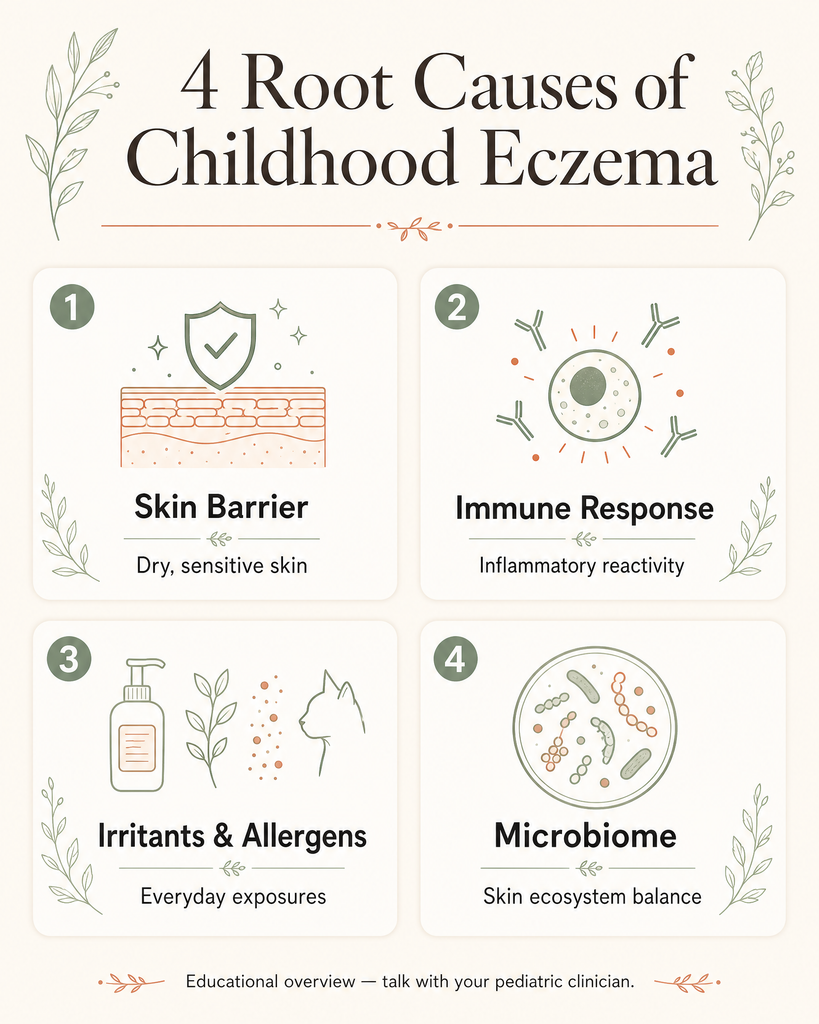
The Root Causes Behind Eczema in Kids
Compromised gut barrier (“leaky gut”) — allows more immune-triggering particles through, which can show up as skin inflammation.
Food sensitivities — dairy, eggs, and gluten can trigger flares in some children, though this varies by child and isn’t universal.
Impaired skin barrier function — a genetic or acquired deficiency in skin lipids (filaggrin) that lets moisture out and irritants in.
Environmental triggers — harsh soaps, synthetic fragrances, and hard water can all provoke flares.
Eczema is the skin telling you something’s inflamed underneath. The cream helps the surface, figuring out the trigger helps the whole picture.
Eczema in Kids: Why It's a Gut Problem, Not Just a Skin Problem 2
Conventional vs. Root-Cause Approach
Conventional Approach
Root-Cause Approach
First step
Topical steroid cream
Trigger identification (food + environment) + gut support
Focus
Suppress flare
Reduce flare frequency long-term
Timeline
Ongoing, reactive
Often noticeable change in 4–8 weeks
5 Natural Approaches for Eczema in Kids
Try an elimination approach with common triggers. Removing dairy or gluten for 3–4 weeks, then reintroducing one at a time, can reveal a clear trigger in many kids.[4]
Support the gut barrier. A pediatric-appropriate probiotic and bone broth or collagen can help support gut lining integrity.
Simplify the skin routine. Fragrance-free, minimal-ingredient moisturizers applied within minutes of bathing lock in more moisture than “medicated” lotions applied later.
Address hidden inflammation. Omega-3-rich foods (or a quality fish oil) can help modulate the inflammatory response over time.
Watch water and laundry habits. Hard water and fragranced detergents are underrated flare triggers — a simple detergent swap sometimes makes a visible difference.
When to See a Provider About Eczema in Kids
If eczema is widespread, oozing, not responding to basic care, or your child seems to be reacting to a growing list of foods, it’s time for a fuller work-up rather than another cream.
FAQ
Will my child outgrow eczema? Many children improve significantly by school age, especially once trigger foods and gut health are addressed — but it varies by child.
Is eczema just an allergy? Not always — it’s related to allergic conditions but isn’t the same as a true food allergy in every case.
Can diet alone fix eczema? Diet is often a major piece, but skin barrier support and environmental triggers usually matter too.
Final Thoughts
Eczema in kids is frustrating precisely because it’s treated like a skin problem when it’s so often a whole-body one. Looking at gut health, hidden food triggers, and the skin barrier together tends to get further than cream alone ever will.
Is your child struggling with eczema? Our team would love to meet with you.
Click this link to schedule a time to meet with our team
Evidence on specific food triggers is strongest for a subset of children with more severe eczema; see the atopic march literature above. Individual trigger foods vary by child and should be confirmed with a provider before broad dietary elimination.