
Chronic bloating is common enough to feel normal — US surveys put the prevalence of bloating symptoms somewhere between 16% and 31% of adults. Bloating (the feeling) and distension (the visible change in your belly) are two different things with two different mechanisms — and the difference matters for what actually helps. A large share of visible distension isn’t extra gas at all. It’s a reflex where the diaphragm drops and the abdominal wall relaxes, pushing the belly forward. Cutting foods is the most common first move and rarely the most useful one. Elimination without a plan to bring foods back can leave you with a shorter food list and the same symptoms.
Almost everyone bloats sometimes. What sends people looking for answers is the other version: flat in the morning, visibly distended by dinner, every single day, regardless of what you ate. That pattern is not random, and it’s usually not a mystery food.
There are two separate things going on, and untangling them is the whole game.
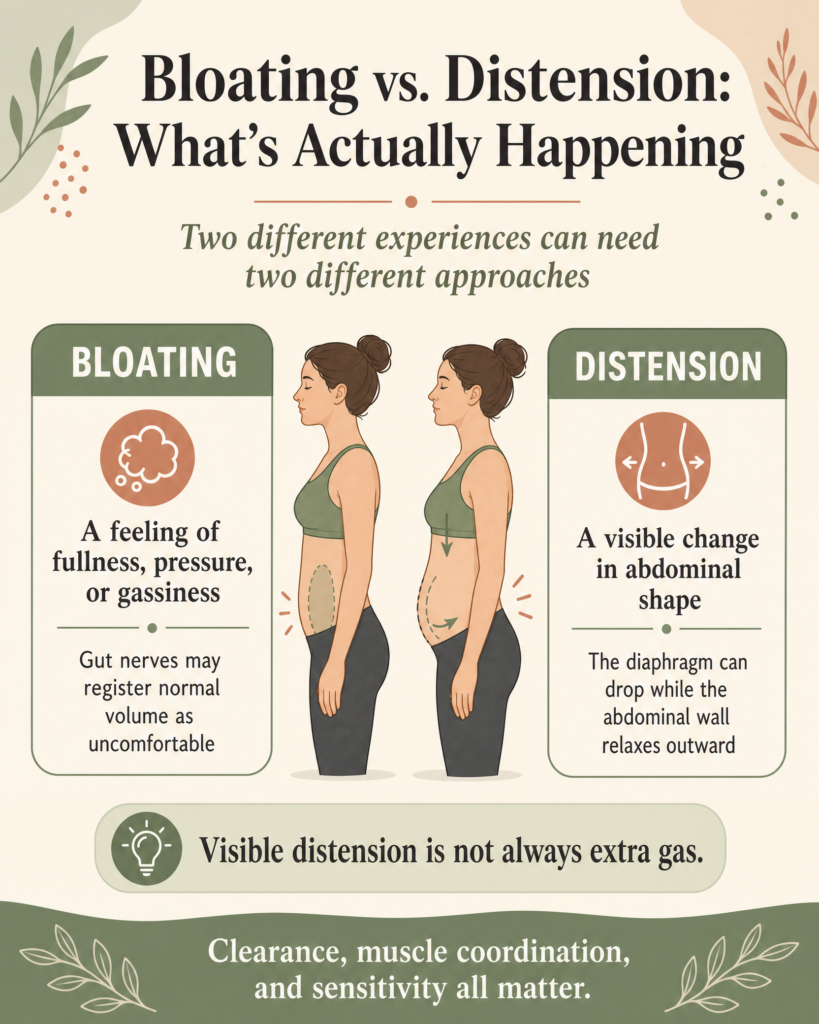
Bloating is the sensation — fullness, pressure, gassiness. It’s often driven by visceral hypersensitivity, meaning the nerves in your gut report normal volumes as uncomfortable.
Distension is the measurable change in the shape of your abdomen. Here’s the part that surprises most people: imaging studies comparing patients to healthy controls found that many people with visible distension didn’t have more gas in their intestines. What they had was a paradoxical muscle response — the diaphragm contracting downward while the abdominal wall relaxes outward. The belly pushes forward. The contents barely changed.
Common signs of the pattern:
Flat in the morning, noticeably distended by evening Belly size changes hour to hour, not day to day Fullness or pressure disproportionate to how much you ate A sense of incomplete emptying with bowel movements Symptoms that improve overnight and reset the next day Trapped gas that’s hard to pass
Constipation and incomplete evacuation. This is the most common driver and the most overlooked, partly because plenty of people having a daily bowel movement are still not emptying well. Retained stool slows transit and impairs gas clearance, which feeds directly into distension.
Pelvic floor and anorectal coordination. When the muscles that should relax during a bowel movement contract instead, both stool and gas become hard to evacuate — and prolonged difficulty expelling gas correlates with distension symptoms.
Visceral hypersensitivity and the abdominophrenic reflex. The gut-brain piece. Heightened gut sensitivity amplifies the perception of normal volumes, and that sensation can trigger the diaphragm-and-abdominal-wall response that produces visible distension.
Fermentation load and gut microbial balance. Certain carbohydrates ferment more in the colon, and in sensitive people that means more gas and more pressure. This is real — it’s just not the whole answer, and it’s rarely where the fix should start.
“Most chronic bloating isn’t a food you haven’t found yet. It’s a motility, muscle, or sensitivity problem that food is only revealing.”
| Conventional Approach | Root-Cause Approach | |
|---|---|---|
| First step | Cut out common trigger foods | Assess transit, evacuation, and whether it’s sensation or distension |
| Focus | Reduce gas production | Improve clearance and lower gut sensitivity |
| Diet role | Long-term restriction | Structured, time-limited trial with planned reintroduction |
| Timeline | Immediate relief, symptoms return | Weeks, with more durable change |
1. Fix the exit before you edit the entrance. If evacuation is incomplete, everything else you try will underperform. Adequate hydration, magnesium where appropriate, a consistent morning routine, and a footstool to improve toilet posture all address clearance directly.
2. Add fiber gradually and from real food. Going from low fiber to high overnight will reliably make bloating worse for a week or two. Build slowly — cooked vegetables, oats, chia, kiwi, and beans introduced in small amounts your gut can adapt to.
3. Walk after meals. Ten minutes of gentle movement after eating supports motility and gas transit. It’s unglamorous and it works better than most supplements marketed for bloating.
4. Use a low-FODMAP trial as a diagnostic, not a lifestyle. The evidence here is genuinely good — reviews of the trial data find roughly half to three-quarters of people with IBS improve on it. But the value is in the reintroduction phase. In a blinded reintroduction study, responders reacted to an average of about two and a half FODMAP categories, not all of them.Most people are restricting far more than they need to. Do the elimination for a few weeks, with guidance, then systematically bring foods back.
5. Retrain the abdominal wall response. For distension driven by abdominophrenic dyssynergia, diaphragmatic breathing and biofeedback-style work target the actual mechanism. Slow breathing into the lower ribs, several minutes daily, is a reasonable place to start.
6. Look upstream at what else is going on. Thyroid dysfunction slows motility. Celiac disease is underdiagnosed and worth screening before you eliminate gluten — testing is unreliable once you’ve already removed it. And bloating that follows a monthly rhythm, worse in the second half of the cycle, points toward a hormonal driver rather than a digestive one.
The pattern that matters most is persistent versus fluctuating. Research analyzing women’s symptom descriptions found that persistent abdominal distension was significantly associated with ovarian cancer, while distension that came and go was not. Guidance recommends testing when a woman — particularly age 50 or over — reports persistent or frequent bloating, early fullness or loss of appetite, or pelvic pain, especially occurring more than 12 times a month.
Also worth prompt evaluation: unintentional weight loss, blood in the stool, difficulty swallowing, vomiting, iron deficiency, or bloating that started suddenly and hasn’t let up.
Does bloating mean I have SIBO? Sometimes, but it’s diagnosed far more often than it’s confirmed. Breath testing has real limitations, and constipation and visceral hypersensitivity account for a much larger share of chronic bloating. It’s worth ruling out the common things first.
Why am I flat in the morning and huge by night? That daily arc is the classic signature of distension driven by the abdominal wall reflex rather than by accumulating gas. It resets overnight because the muscle response resets.
Should I just cut out gluten and dairy? Not as a first move, and not before celiac testing — removing gluten first makes the test unreliable. Open-ended elimination tends to shrink the diet without solving the mechanism.
Is bloating that tracks with my cycle different? Yes. Bloating that predictably worsens in the week or so before your period is usually hormonal rather than digestive, and it responds to different things.
Chronic bloating gets dismissed a lot — by other people, and eventually by the person living with it. But the mechanisms behind it are well described and largely addressable.
“The question isn’t ‘what food is doing this to me.’ It’s ‘why has my gut become this sensitive, and why isn’t it clearing.'”
Whether this is your first visit or your next one, a real evaluation beats another round of guessing at foods.