
Histamine intolerance is a working framework rather than a formal diagnosis. There are no agreed diagnostic criteria and no validated biomarker for it. The blood test most often sold for it doesn’t do the job. Serum DAO doesn’t reliably reflect enzyme activity in the gut, so it can’t confirm or rule out the condition. It’s diagnosed by response, not by lab. A structured elimination of high-histamine foods for two to four weeks, followed by systematic reintroduction, is the accepted approach. Other conditions have to be excluded first — IgE food allergy, mast cell disorders, celiac disease and inflammatory bowel disease can all look similar and need different treatment.
Histamine intolerance is the explanation a lot of people land on after a confusing few months: wine gives you a headache now, aged cheese flushes your face, leftovers make you feel awful, and none of it used to happen.
The pattern is real. The label is more contested than the internet suggests — and knowing exactly where the evidence is solid and where it isn’t will save you from both unnecessary restriction and a missed diagnosis.
Histamine is a signaling molecule your body makes and also absorbs from food. It’s involved in immune responses, stomach acid production, and brain signaling. Normally, enzymes break down what arrives from food before it accumulates — primarily diamine oxidase, or DAO, in the lining of the intestine.
The proposed mechanism for histamine intolerance is an imbalance: more histamine coming in than your enzymes are clearing, with symptoms appearing once the load crosses a personal threshold.
You may already know that part. What usually doesn’t get said is how uncertain the science still is. A 2021 review in Nutrients put it bluntly — histamine intolerance is “currently not a nosological unit,” meaning there are no agreed diagnostic criteria, no accepted lab marker, and no consensus definition. Reduced DAO activity also shows up in people with no symptoms at all.
That doesn’t mean your reactions aren’t real. It means the framework is useful for organizing them, not a diagnosis you can confirm with a test.
Commonly reported symptoms:
Facial flushing, itching, or hives Headaches or migraines, especially after wine Nasal congestion, sneezing, or a runny nose without a cold Abdominal pain, bloating, diarrhea, or constipation Racing heart or palpitations Low blood pressure or dizziness A sense of anxiety or agitation after eating
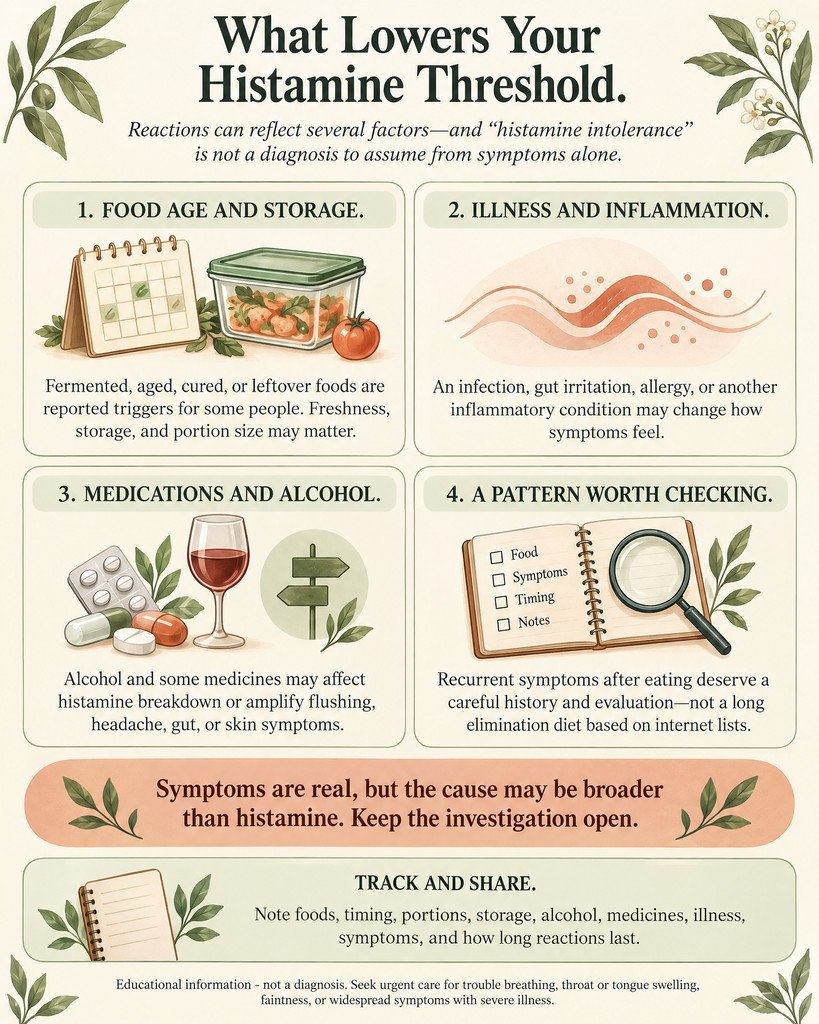
This is the part most articles skip, and it’s the actual question: why foods you’ve eaten your whole life started causing trouble.
Medications that inhibit DAO. A number of common medications reduce DAO activity. If reactions began within weeks of starting something new, that timeline is worth reviewing with your prescriber.
Alcohol. Alcohol is both high in histamine and an inhibitor of its breakdown. Wine is the single most commonly reported trigger, and increasing intake is a frequent reason symptoms appear.
Gut inflammation or disruption. DAO is produced in the intestinal lining. Anything that damages or inflames it — a gastrointestinal infection, a course of antibiotics, untreated celiac disease, inflammatory bowel disease — can plausibly reduce capacity. This is the most common “why now” we see: symptoms starting after a stomach bug or a rough course of antibiotics.
Hormonal shifts. Estrogen and mast cells interact. Estradiol has been shown to activate mast cells, and estrogen signaling promotes allergic immune responses — which is part of why some women notice histamine-type symptoms cycling with their period or intensifying during perimenopause. The mechanism is documented; the clinical picture in any individual woman is harder to pin down.
Total load rather than one food. Histamine effects are cumulative. A glass of wine alone might be fine; wine plus aged cheese plus yesterday’s leftovers plus a poor night’s sleep crosses the line. This is why the reactions feel so inconsistent.
“The question isn’t usually ‘which food is the problem.’ It’s ‘what changed in my capacity to clear it.'”
This matters more than the diet, because several of these need entirely different treatment:
IgE-mediated food allergy. The first thing to exclude. True allergy can be life-threatening and behaves differently — rapid, reproducible, and often with swelling or breathing symptoms.
Mast cell disorders. Mastocytosis and mast cell activation syndrome produce overlapping symptoms. Serum tryptase testing is the standard starting point.
Celiac disease and inflammatory bowel disease. Both cause the gut inflammation that could plausibly reduce DAO in the first place, and both need treating in their own right.
H. pylori and other infections.
Carcinoid and other flushing syndromes, when flushing is prominent and episodic.
| Conventional Approach | Root-Cause Approach | |
| First step | “Your allergy testing is normal” | Exclude allergy and mast cell disease, then test the pattern directly |
| Testing | A DAO level sold as diagnostic | DAO as supporting information at most; tryptase, celiac serology where indicated |
| Diet | Open-ended avoidance list | Structured 2–4 week elimination with planned reintroduction |
| Focus | Avoid the foods forever | Find what lowered the threshold and address that |
1. Keep a food and symptom diary for two weeks before changing anything. Record what you ate, when, how fresh it was, and what happened in the following four hours. Because histamine effects are cumulative, the pattern often only becomes visible written down.
2. Run the elimination as a time-limited experiment. The British Dietetic Association describes a two-to-four week elimination of high-histamine foods, followed by gradual reintroduction to find individual tolerance. Two to four weeks — not indefinitely. The diet is socially and nutritionally restrictive, and staying on it permanently is its own problem.
3. Know the usual suspects. Aged and hard cheeses, cured and processed meats, fermented foods including sauerkraut and kombucha, alcohol (wine especially), vinegar, tomatoes, spinach, eggplant, and leftovers. Consensus across lists is strongest for fermented foods and tomatoes.
4. Treat freshness as a variable in its own right. Histamine accumulates in food as it sits. Buying fresh, cooking and eating promptly, and freezing leftovers immediately rather than refrigerating them for days often reduces reactions without removing a single food group.
5. Reintroduce systematically. One food at a time, a few days apart, with notes. This is where the useful information lives — most people discover their tolerance is far wider than the elimination list implied.
6. Address the gut underneath it. If this started after an infection, a course of antibiotics, or alongside other digestive symptoms, the intestinal lining is the more productive target than a permanent food list. That’s where celiac screening, and a real look at digestion, belong.
7. Be cautious with DAO supplements. They’re widely marketed for this and the supporting evidence is limited. Not dangerous for most people, but not a substitute for working out what changed.
Seek emergency care — call 911 — for swelling of the lips, tongue, or throat; difficulty breathing or swallowing; widespread hives with dizziness or faintness; or any reaction that comes on rapidly after eating and is getting worse. These suggest a true allergic reaction, which is a different and more urgent situation.
Book a visit for reactions that are new and worsening; recurrent flushing with fainting or near-fainting; unexplained weight loss; diarrhea with blood or lasting more than two weeks; symptoms that began after a gastrointestinal illness or antibiotics; or before starting an elimination diet, so allergy and other conditions can be excluded first.
Is histamine intolerance a real diagnosis? The symptoms are real and the mechanism is plausible. But it isn’t a formally defined condition — there are no agreed criteria and no validated test. It’s best treated as a working framework that earns its place if a structured elimination and reintroduction supports it.
Should I get a DAO blood test? It can add supporting information, but it can’t diagnose or exclude anything. Serum DAO doesn’t reliably reflect intestinal enzyme activity, and levels vary over the day and month.
What about IgG food sensitivity panels? These aren’t recommended for diagnosing food reactions. IgG antibodies to foods largely reflect exposure, not intolerance, and these panels commonly flag foods people tolerate perfectly well.
Why do I react to wine but not other alcohol? Wine is both high in histamine and contains other compounds that affect its breakdown. Alcohol in general slows histamine clearance, so it tends to lower the threshold for whatever else you eat alongside it.
Can this go away? Often yes, at least partly — particularly when it followed a gut infection, a medication, or a period of heavy drinking. That’s the argument for treating the elimination as a diagnostic step rather than a permanent lifestyle.
Histamine intolerance is the right framework for some people and a diagnostic dead end for others. The way to tell the difference is a short, structured trial with a real reintroduction phase — not a lifetime food list built from an internet chart.
“Eliminate for a month to learn something. Not forever, because the list felt safer.”
Whether this is your first visit or your next one, ruling out the conditions that mimic this comes first — and it’s quick.
Think You Might Have Histamine Intolerance? Our team would love to meet with you.
Click this link to schedule a time to meet with our team.
Related: Why Am I Always Bloated? | Why Do I Have No Energy After Eating? | Why Your Annual Bloodwork Can Look “Normal”