
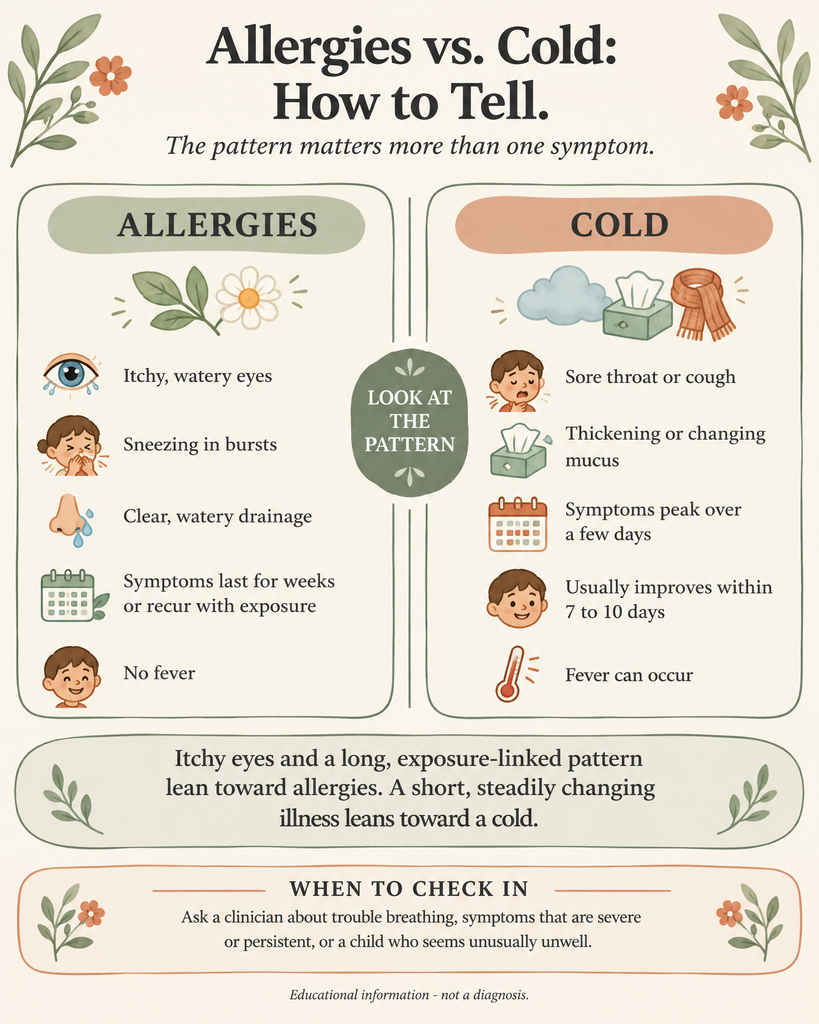
Allergies or a cold — timing is the most useful clue you have. Cold symptoms peak in the first few days and improve within about 7 to 10 days; allergy symptoms continue as long as the exposure does. Itch is the second clue. Itchy nose, itchy eyes, and sneezing fits point toward allergy — a cold doesn’t itch. Fever belongs to infection. Allergies don’t cause fever, and thick or discolored discharge suggests a cold rather than allergy.[1][2] Ragweed matters right now. Ragweed season runs from around August through the first frost, and in most of the U.S. it peaks in mid-September.
Your child has a runny nose again. School started three weeks ago, so a cold is entirely plausible — except it’s been going for two weeks, there’s no fever, and they keep rubbing their eyes. Mid-September is exactly when this gets confusing, because that’s when ragweed peaks. The good news is a handful of specific signs separate allergies or a cold reliably.
A cold is an infection. Your child’s immune system is fighting a virus, which is why colds bring the whole package: fever, sore throat, body aches, tiredness, and a cough — and why symptoms follow a predictable arc of worst first, then steadily better.
Allergy is not an infection. It’s an immune reaction to something harmless — pollen, dust mites, pet dander, mold — that produces inflammation in the lining of the nose without any virus involved. That’s why there’s no fever, and why the symptoms don’t follow the cold’s arc. They follow the exposure instead.
You may already know that pollen counts drive seasonal symptoms. What’s less obvious is what ends the season: ragweed keeps releasing pollen until the first hard frost, so the finish date moves with the weather rather than the calendar.
When you’re weighing allergies or a cold, this is the cluster that points to allergy:
Clear, watery discharge that stays clear Sneezing in bursts rather than occasionally Itchy nose, eyes, or throat Worse outdoors or on windy days, better indoors No fever at any point Same time every year
Duration. The single best discriminator. Cold symptoms rarely last longer than about two weeks; allergy symptoms persist for as long as your child is exposed, which during pollen season can mean many weeks at a stretch.
Fever. Colds often bring a low-grade fever, particularly in the first few days. Allergies do not cause fever. If there’s a temperature, think infection.
Discharge. Allergy discharge is typically clear, thin, and watery. Thick discharge, regardless of color, suggests a cold or another infectious process. Worth knowing: discharge turning yellow or green during a cold does not by itself mean a bacterial infection has developed — that’s a normal part of the viral course.
Itch. This is the tell that parents most often overlook. Itchy eyes, itchy nose, and repeated sneezing fits strongly favor allergy, and itchy watery eyes in particular are uncommon with a simple cold.
“Colds get better on a schedule. Allergies get better when the exposure stops.”
| Conventional Approach | Root-Cause Approach | |
|---|---|---|
| First step | Wait it out, or treat symptoms | Match the pattern: duration, fever, itch, discharge |
| Focus | Suppress the runny nose | Identify and reduce the actual exposure |
| Testing | Rarely offered | Allergy testing when the pattern is seasonal or year-round |
| Timeline | Repeats every few weeks | Real change once the trigger is known |
1. Track the pattern before treating it. Note the date symptoms started, whether there was ever a fever, and whether symptoms are worse outdoors. Two weeks of notes will usually answer whether you’re dealing with allergies or a cold, and it’s the most useful thing you can bring to a visit.
2. Rinse the pollen off at the end of the day. A shower and a change of clothes after outdoor play removes pollen from hair and skin before it travels to the pillow. This matters most in the evening, when a day’s worth of exposure otherwise follows your child to bed.
3. Use saline rinses daily during the season. A gentle saline spray or rinse clears pollen and mucus from the nose mechanically, with no medication involved. Daily use during peak weeks works far better than occasional use.
4. Keep the bedroom the clean-air room. Windows closed on high-pollen days with air conditioning instead, a HEPA filter running, and bedding washed weekly in hot water. Your child spends more consecutive hours there than anywhere else.
5. Time outdoor play for the afternoon. Ragweed pollen counts tend to run highest in the morning, so shifting outdoor activity later in the day reduces the dose without keeping anyone inside.
6. Test rather than guess. If this happens every fall, allergy testing settles the allergies or a cold question for good instead of another season of trial and error. Knowing whether it’s ragweed, dust mites, or the family cat changes what you actually do about it.
Book a visit for fever lasting more than a few days, symptoms that improve and then suddenly worsen, facial pain or swelling around the eyes, ear pain, or symptoms that keep going past two weeks without improvement.
Seek care promptly for difficulty breathing, wheezing, or a child working hard to breathe. Ragweed is a significant asthma trigger, and September is a known peak for childhood asthma flares — so a child who is both congested and wheezing needs evaluation rather than watching.
Can allergies cause a cough? Yes, usually from postnasal drip rather than the chest. Cough is more characteristic of a cold, but drainage from allergies can irritate the throat and produce a nagging cough — especially at night.
Why does my child get sick every September? Back-to-school virus exposure and ragweed peak at the same moment, which is exactly why allergies or a cold is so hard to read this month. Duration and fever will separate them.
Can a child have both at once? Absolutely, and it’s common. A child with untreated allergies has an inflamed, congested nose, which makes it easier for a cold to feel worse and last longer.
Does green mucus mean antibiotics are needed? Not on its own. Color change is a normal part of a viral illness. What prompts further evaluation is symptoms that keep worsening past day 10, or improvement followed by sudden decline.
The honest answer is that telling allergies or a cold apart is genuinely hard — even for us. It gets easy by week two.
“If it’s been three weeks and there’s never been a fever, stop treating it like a cold.”
Whether this is your first visit or your next one, bring the notes. The pattern tells us more than any single exam.