Safe teething remedies for babies that actually work are simple and physical: cold, counter-pressure, and comfort. Nothing you buy will beat a chilled teether and a calm adult. Teething causes mild, local symptoms — drooling, gum swelling, irritability, and chewing. A structured 2025 review found no credible evidence linking teething to high fever or digestive upset. The FDA has warned against two popular categories: numbing gels containing benzocaine, and homeopathic teething tablets found to contain inconsistent amounts of belladonna. Teething necklaces and amber jewelry have been linked to strangulation and choking, including deaths. The ADA advises against them.
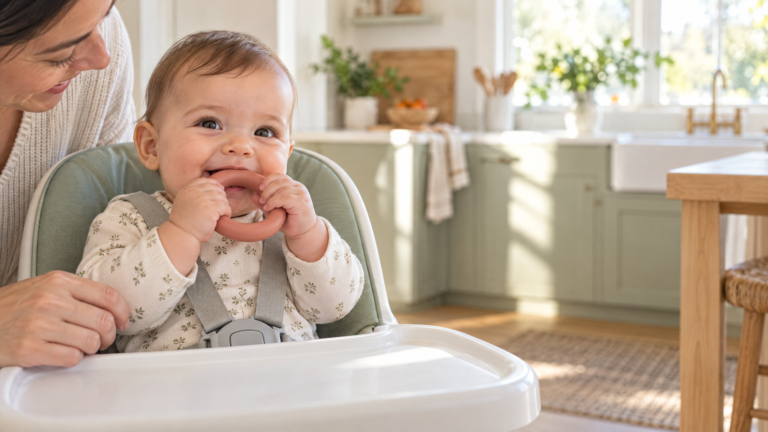
Safe teething remedies for babies are a surprisingly short list — Safe teething remedies for babies — baby chewing a chilled silicone teether
Teeth usually start arriving between 6 and 12 months. The discomfort is real, your baby’s distress is real, and the instinct to buy something that fixes it is completely understandable. The problem is that several of the most popular purchases carry genuine risk, and the things that actually help cost almost nothing.
1. A chilled teether — cold, not frozen. Cold numbs sore gums and reduces inflammation. Chill a solid rubber or silicone teether in the refrigerator, not the freezer. Frozen solid is hard enough to bruise inflamed gums, and some products can crack.
2. Counter-pressure. This is the most underrated item on the list. Firm, steady pressure on the gum with a clean finger, a cool spoon, or damp gauze relieves teething pain better than almost anything, which is exactly why babies chew. A minute or two of gentle rubbing often settles a baby who’s been inconsolable.
3. A cold, damp washcloth. Wet a clean cloth, wring it out, chill it, and let your baby chew a corner under supervision. It provides cold and texture at once, and it’s free. Tying a knot in one end gives little hands something to hold.
4. Breastfeeding for comfort. Nursing is one of the most effective comfort tools available during teething — it combines sucking, closeness, and calm all at once. Some babies nurse more during teething and that’s perfectly fine. If a baby bites, calmly unlatch, say “no biting” plainly, and offer a teether; this is a short phase and not a reason to stop.
5. Clean, safe things to chew. A solid one-piece silicone or rubber teether with no small parts or liquid filling. Supervise use, and check regularly for cracks or wear.
6. Extra holding and a predictable routine. A teething baby is uncomfortable and dysregulated. More contact, a calm bedtime routine, and lower stimulation in the evening do real work.
7. Keep the chin and neck dry. Drooling is the most reliable teething symptom, and constant wetness causes a chapped, irritated rash. Pat dry often and use a plain barrier ointment on the chin.
8. Ask your pediatrician about pain relief for the hard nights. For significant discomfort, there are appropriate options — but dosing depends on your baby’s age and weight, and some are not suitable for young infants. That’s a conversation with your pediatrician rather than a guess.
“Cold, pressure, and comfort. That’s the whole list — and it works better than anything sold in the teething aisle.”
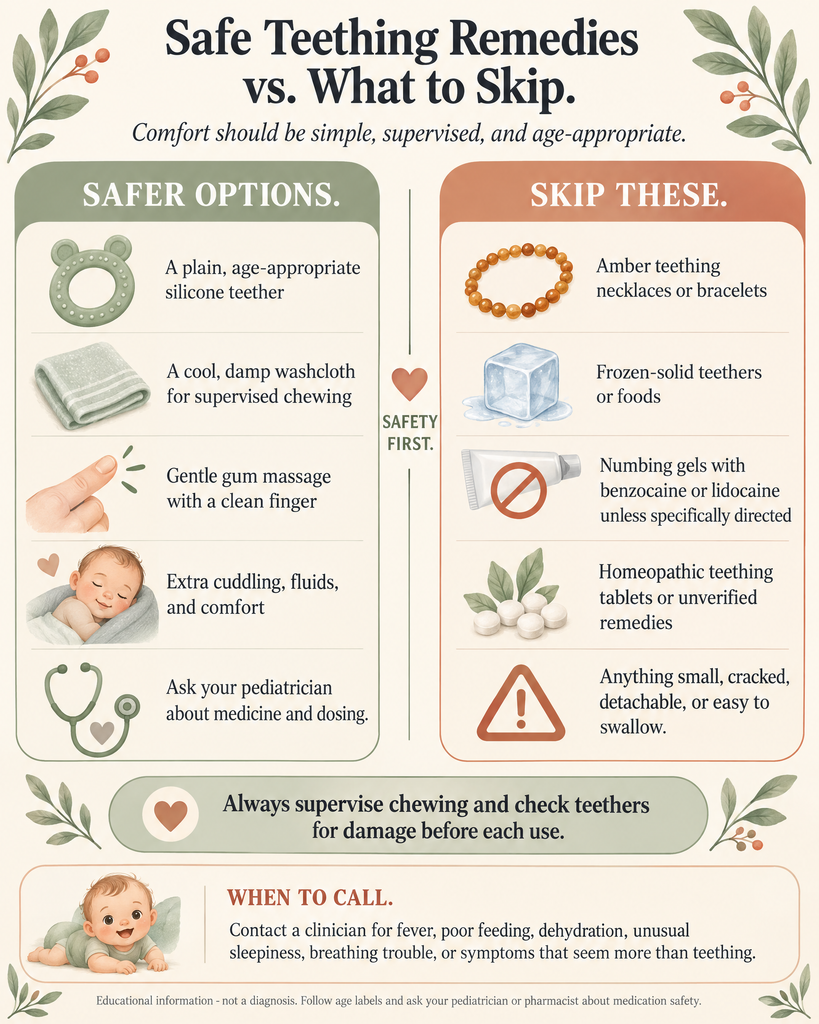
Numbing gels with benzocaine or lidocaine. Despite the marketing, these are not safe teething remedies for babies under 2. Benzocaine has been linked to methemoglobinemia, a rare but serious condition in which the blood’s ability to carry oxygen is reduced. Gels also wash away in seconds with saliva, so the risk buys very little.
Homeopathic teething tablets and gels. The FDA investigated these products after reports of harm and confirmed inconsistent amounts of belladonna — a genuinely toxic plant compound — in tablets on the market. Amounts varied from the labeled claim, meaning a parent dosing as directed could not know what their baby was getting.
Teething necklaces, bracelets, and amber jewelry. Anything worn around a baby’s neck or wrist carries strangulation and and they don’t belong on any list of safe teething remedies for babies. There’s also no evidence amber releases any pain-relieving substance through the skin. The ADA advises against them.
Frozen solid teethers, and teethers with liquid filling. Frozen-hard surfaces can bruise swollen gums, and liquid-filled products can crack and leak.
Hard food “teethers” without supervision. Frozen bagels, carrots, and teething biscuits can break off into choking-sized pieces. If you offer food for chewing, it should be under direct supervision and appropriate for your baby’s eating stage.
Rubbing alcohol or spirits on the gums. Still passed down as folk advice. Alcohol is never safe for an infant.
This distinction matters more than anything else in this article, because attributing a real illness to teething delays care.
Genuinely associated with teething: drooling, gum swelling and tenderness, irritability and fussiness, increased chewing and biting, mild sleep disruption, decreased appetite for solids, and a drool rash on the chin.
Not caused by teething: high fever, diarrhea, vomiting, cough, runny nose, or a rash anywhere other than the chin from drool. A structured review published in 2025 concluded there is no credible evidence linking teething to high fever or gastrointestinal disturbances.
The reason this matters: teething runs for months across the exact window when babies lose maternal antibody protection and start getting viral illnesses. The two overlap constantly. A baby with a fever of 102 is a baby with an infection who also happens to be teething.
Call your pediatrician for a temperature of 100.4°F (38°C) or higher in a baby under 3 months, fever in an older baby that persists or climbs, diarrhea or vomiting, refusing to drink or signs of dehydration, a rash beyond the drool-contact area, pulling at the ears with fever, or a baby who seems genuinely unwell rather than uncomfortable.
| Conventional Approach | Root-Cause Approach | |
|---|---|---|
| First step | Reach for a teething product | Cold, counter-pressure, and comfort first |
| Symptoms | Attribute fever and diarrhea to teething | Treat those as signs of illness and evaluate them |
| Products | Gels, tablets, amber necklaces | Simple, supervised, FDA-cautioned products avoided |
| Timeline | Looking for an immediate fix | Comfort through a months-long normal process |
What are the safest teething remedies for babies? The safe teething remedies for babies with the best track record are chilled (not frozen) teetherscounter-pressure on the gums, a cold damp washcloth, breastfeeding for comfort, and extra holding. Simple and physical beats anything marketed.
Can teething cause a fever? Not a high one. Teething may cause a very slight elevation in temperature, but a true fever — 100.4°F or higher — points to infection and should be evaluated on its own.
Can teething cause diarrhea? No. Reviews of the evidence find no credible link between teething and gastrointestinal upset. Diarrhea in a teething baby is a separate issue worth attention.
Are amber teething necklaces safe if I supervise? No. The strangulation and choking risks apply even with supervision, and there’s no evidence of benefit. If you like the idea of amber, it can be worn where it can’t reach the mouth or neck — though it won’t do anything for pain.
How long does teething last? Teeth arrive in waves from around 6 months until roughly age 3. Any individual tooth causes a few rough days, not months of continuous misery. Weeks of ongoing distress deserves a look for another cause.
Safe teething remedies for babies come down to three things that have nothing to do with the teething aisle: cold, pressure, and comfort. The most important skill isn’t soothing — it’s knowing what teething doesn’t cause, so a real illness doesn’t get written off for a week.
“Teething makes babies uncomfortable. It doesn’t make them sick. If your baby seems sick, something else is going on.”
Whether this is your first visit or your next one, we’d always rather check a feverish baby than have you wait it out.
Is Your Baby Struggling With Teething Discomfort? Our team would love to meet with you.
Click this link to schedule a time to meet with our team.